Question asked by Tashi
It seems like I have been banned from the chat, so as a result, I would like to ask my questions here:
"Comparatively, everyone can engage in protector practice without taking vows and tantric commitments."
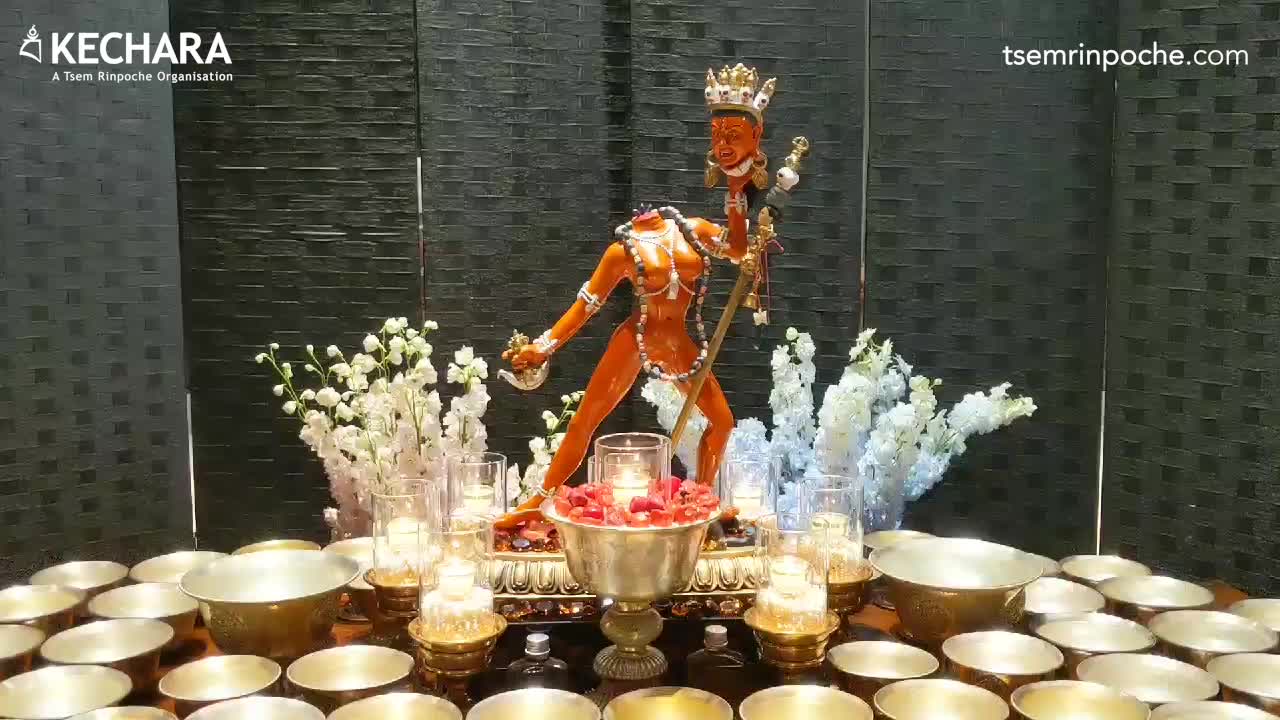
Wait, but how do protector practices not require vows? If one were to do the Tashi Tseringma sadhana, they MUST make a torma offering everyday to keep up with practice in clairvoyance and so forth. How is it that there aren't any vows in protector practices? Ekajati and Za Rahula are one of the most austere and intense protectors out there that will only focus on spiritual paths, not mundane things(that's what Dorje Legpa is for). So in that case, anyone can take up their practice and not face the terrifying rage of the protectors for an attempt to do a simple practice without vows, empowerment, nor true accomplishment?
"The sadhana of Vajrayogini is very short compared to the sadhana of Heruka Cakrasamvara, Yamantaka or Guhyasamaja. In this degenerate age, people do not dedicate much time to practice, hence Vajrayogini practice is more suited for busy modern people."
But isn't that pretty lazy? I mean if one just wants to practice tantra, they take up a simple practice without trying and go from there? What benefit is there to that? Shouldn't there at least be an attempt after mastery over lower tantras or other instructions from the guru to later on practice advanced yidams such as Guhyasamaja? Why be lazy and stick with a simple minor deity that Tsongkhapa practiced and not focus on more advanced deities with clear commentaries from its original source by masters such as Tsongkhapa like Yamantaka or Guhyasamaja? Isn't the point to destroy this laziness and dedicate oneself to enlightenment for the sake of others? It's not like simplicity will always lead to liberation now is there?
How short is Vajrayogini's sadhana in that case compared to a Yamantaka or a Guhyasamaja sadhana? How long would it take with all that mantra recitation, prayers, refuge, offerings, confession, etc.?
An Additional Question:
-The Ganden Tripa is the head of the Gelugpa school, not the Dalai Lama, is that correct? So why would there be a controversy over Shugden if the Ganden Tripa doesn't order it, but the Dalai Lama does? Wouldn't the ban be enforced by the Ganden Tripa if he is indeed the true head while the Dalai Lama is secondary? So why does all the blame have to go to the Dalai Lama as seen with other Shugdenpa groups(and could Tsem Rinpoche or any Shugden master please make an international meeting with all the lamas and give a teaching to the public to not misuse the name of Shugden and try to make protests that will cause the protestors to lose tons of karma for being angry at a bodhisattva like stating that "the Dalai Lama is fake," etc.?) And one of the Shugden masters, the 101st Ganden Tripa, was the head of the Gelugpa. So why couldn't he remove the ban that a secondary figure enforced? He is the head, is he not? Please explain, this is pretty confusing.
I apologize for my criticisms, but as I am new to tantra, I am a little wary of why this goes and that and so on.
P.S. How does one remove a chat ban? Or is it permanent? My apologizes if this cannot be done.